How Much Do Real Estate Agents Make in California?
Whether you are an aspiring real estate agent or an established professional considering leveling up to become a real estate broker, you likely want to know how much you could make as a real estate agent in California.

With California’s relatively high price points, agents have the potential to earn larger commissions than in many other parts of the country. According to the 2026 California Real Estate Salary Guide, 60% of full-time real estate agents in California earn over six figures.
However, real estate is not a standard nine-to-five job. As a California real estate agent, you have control over your earning potential. You get to choose how and when you work based on your preferences and priorities.

How Real Estate Agents Get Paid
Most real estate agents in California do not receive an hourly wage or a fixed salary. Instead, their income comes from commissions on property sales, typically 5-6% of the property’s sale price (split among the buyer’s agent, seller’s agent, and their brokerages).
While this means a California real estate salary is not guaranteed or wholly predictable, it also means agents have a unique incentive to work hard and close deals. You have greater control over your financial situation than you would in a salaried position.
A recent survey of Allied Real Estate Schools alumni found that real estate agents who work more hours earn more money—especially agents who work between 51 and 59 hours per week. Hard work pays off in real estate.
What Is the Average Real Estate Agent Salary in California?
Real estate can be a lucrative career, especially for agents working in California. Indeed reports the national median pay for real estate sales agents is $118,345; Glassdoor reports the average pay for California real estate agents is $192,498. However, the average salary of a real estate agent in California varies significantly depending on experience, location, and the number of hours you dedicate to your business.
Considering California’s median home value often sits in the $700,000 to $800,000 range, agents have excellent opportunities to earn money. Even if you do not have clients in upper-tier markets, the sheer volume of active buyers and sellers in California creates a substantial need for agents with expertise across various price points and niches.
How Much Commission Does a REALTOR® Make in California?
Real estate agents in California typically earn commissions based on the final sale price of a property. According to FastExpert, the average real estate commission in California is 5.14%.
For example, if a home sells for $800,000, a 5.14% commission would total $41,120. However, one agent does not keep that entire amount. This commission is typically split between the buyer’s agent, the seller’s agent, and their respective brokerages.
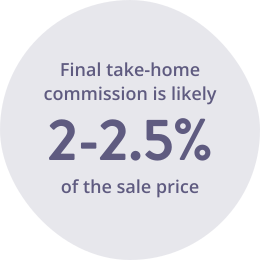
Once you account for these splits, the actual earnings for an individual agent are closer to 2% or 2.5% of the sale price. Returning to the $800,000 sale example, the expected income for the individual agent would be approximately $16,000 to $20,000.
Impact of Experience on Earnings
Experience is a major driver of income potential.
- Entry-Level Agents: First-year agents often earn less as they build their client base and pay for initial marketing and licensing fees.
- Mid-Career Agents: As agents build a referral network and gain expertise, their marketing costs may decrease while their transaction volume increases.
Seasoned Agents: Top producers with years of experience often dominate their local markets, commanding higher earnings through a steady stream of referrals and repeat business.
Geographic Variations in Earnings
While commission rates contribute to your salary, the most important factor is arguably the California city in which you choose to work. High-paying real estate markets generally correlate with high property values.
For instance, the median home value in Los Angeles is significantly higher than in areas like Oxnard or Fresno. It might take twice as many sales in a lower-cost area to match the salary you could earn in a luxury market. However, high-value markets often come with increased competition and higher marketing costs.
Factors Affecting Earnings
Several variables influence how much you take home at the end of the year:
- Employment Type: Full-time agents generally earn significantly more than part-time agents.
- Niche: Specializing in luxury real estate, commercial properties, or property management can lead to different income brackets.
- Broker Splits: The percentage of commission you share with your broker affects your bottom line.
Marketing Budget: Investing in your personal brand early on can accelerate your earning potential.
Career Advancement and Maximizing Income
To maximize your income, consider focusing on specific niche markets, such as luxury real estate, a particular neighborhood you know well, or a specific demographic.
Additionally, networking is vital. Your contacts and your ability to generate leads are directly tied to your revenue. Joining local real estate groups and staying active in your community can yield high returns.
Comparison with Related Roles: Agent vs. Broker
Some of the highest-paying real estate jobs in California include real estate brokers, real estate developers, and property managers.
Real Estate Broker Salary
Real estate brokers typically earn higher salaries than sales agents. While agents earn commissions on property sales, brokers may also earn income from fees charged to agents within their brokerage. However, brokers also carry additional responsibilities, such as overseeing a team of agents and managing legal compliance.
Steps to Becoming a Real Estate Agent in California
If the income potential appeals to you, the first step is obtaining your license. The California Department of Real Estate (DRE) requires the following:
Step 1: Meet the general California real estate license requirements
You must be at least 18 years old and meet the eligibility criteria outlined by the California Department of Real Estate.
Step 2: Complete 135 hours of pre-licensing education
Many students complete their pre-licensing courses online, either at your own pace or via livestream.
Step 3: Apply for the Real Estate Salesperson Examination
Submit your application to take the California Real Estate Salesperson Exam.
Step 4: Submit fingerprints for a background check
You’ll need to complete a background check as part of your application process.
Step 5: Pass the California Real Estate Licensing Exam
Achieve a minimum score of 70% on the licensing exam to qualify.
Step 6: Obtain sponsorship from a licensed California broker
Secure a sponsorship from a broker to activate your real estate license.
If you wish to advance to a broker license later, you will need a minimum of two years of full-time real estate sales experience and must complete eight required courses.
Job Satisfaction and Work-Life Balance
Beyond the money, many agents choose this career for the lifestyle. Real estate offers the flexibility to set your own schedule, making it an attractive option for those balancing family or other commitments. While income can be variable, the autonomy and the satisfaction of helping clients find their dream homes are major perks of the profession.
Start Your Journey with Allied Schools
Ready to take control of your earning potential? Allied Schools has helped over 350,000 California real estate professionals get licensed. We offer livestream classes or self-paced online courses to fit your life, plus an exam prep program with a pass-or-don’t-pay guarantee that helps you pass on the first try.
Disclaimer: This guide is for general informational purposes only, based on a September 2025 survey of Allied Schools alumni and publicly available industry sources. While Allied strives for accuracy, we make no guarantees regarding the completeness, reliability, or applicability of the information. Earnings and outcomes vary widely based on factors like location, experience, and market conditions and should not be considered guarantees. This guide does not constitute professional advice. Users should consult additional sources for personalized guidance.